
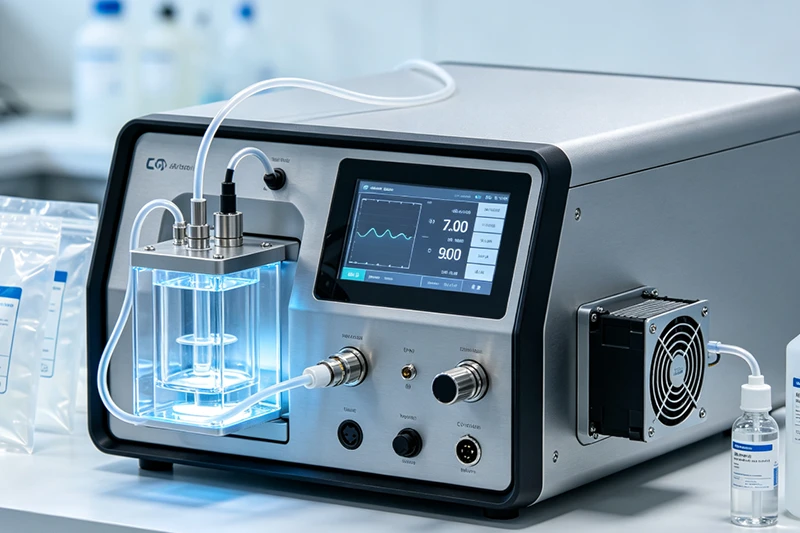
Industry Trends & Core Positioning of Thermoelectric Coolers Modules for Analytical Instruments
Modern precision analytical apparatuses, including mass spectrometers, spectroscopic detectors, chromatographic devices, and environmental monitoring analyzers, demand ultra-stable thermal environments to guarantee accurate detection data and consistent experimental repeatability. Traditional instrument cooling solutions rely on passive heat sinks, fan convection, or bulky compressor cooling systems, which struggle to suppress ambient temperature interference, eliminate internal component hotspots, and maintain constant microscopic temperature fields.
These conventional cooling methods often cause baseline drift, detection sensitivity attenuation, and unstable test results under long-duration continuous operation. Our Thermoelectric Coolers solid-state cooling modules serve as high-precision active temperature control cores for analytical equipment. Adopting the Peltier thermoelectric effect, they deliver rapid heating and cooling bidirectional adjustment, compensating tiny temperature fluctuations in precision instruments. This solution upgrades traditional passive heat dissipation to intelligent active thermal stabilization, meeting strict temperature control standards for laboratory-grade analytical apparatus.
Innovative Application of Thermoelectric Coolers Modules in Spectroscopy & Detection Systems
Spectroscopic and optical detection instruments are extremely sensitive to thermal changes, where minor temperature deviation will lead to optical path offset, wavelength drift, and reduced signal-to-noise ratio, directly affecting detection accuracy and experimental credibility. Conventional heat dissipation structures can only dissipate accumulated heat passively and cannot actively lock the optimal operating temperature of optical components, infrared detectors, and laser sensing units.
Our compact embedded Thermoelectric Coolers modules feature fast thermal response and micro-temperature compensation capability, perfectly matching high-precision optical detection scenarios. Installed close to core optical and sensing components, the modules achieve real-time dynamic temperature correction, effectively restraining thermal drift during long-term testing. With miniaturized size and low electromagnetic interference design, they avoid disruption to optical signals and circuit operation, ensuring ultra-stable working status for spectroscopic analysis and high-precision detection equipment.
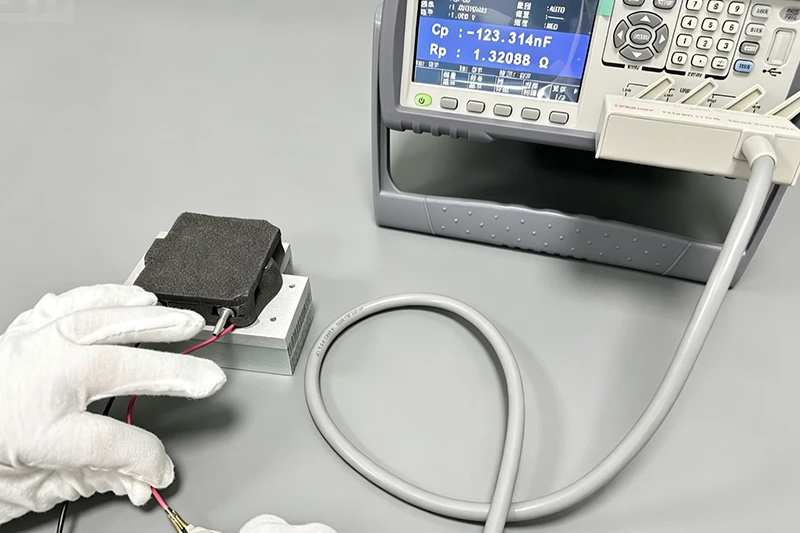
Thermoelectric Coolers Modules for Gas Analysis & Environmental Monitoring Instruments
Online gas analyzers, environmental pollutant monitors, and breath analysis equipment require continuous 24-hour field operation, facing complex and variable ambient temperature conditions and high-humidity sample interference. Traditional cooling structures cannot achieve efficient sample dehumidification and constant-temperature pretreatment, resulting in condensed water precipitation, sensor contamination, and fluctuating detection data.
Thermoelectric Coolers modules act as core cold trap and constant-temperature pretreatment units for gas analysis systems, realizing precise condensation dehydration and low-temperature stabilization of gas samples. By maintaining a fixed low-temperature condensation environment, the modules effectively remove water vapor and impurity interference without affecting gas composition characteristics. Cooperating with high-precision temperature sensors and intelligent control systems, they achieve stable sample pretreatment, greatly improving the anti-interference ability and long-term operational stability of field analytical monitoring instruments.
Dedicated Thermoelectric Coolers Precision Temperature Control for Chromatography & Laboratory Analytical Devices
Chromatographic analyzers, biochemical detection instruments, and laboratory precision analytical equipment require strict constant-temperature control for columns, reaction chambers, and detection cavities to ensure consistent chemical reaction efficiency and accurate component analysis results. Fluctuating cavity temperatures will cause retention time deviation, component separation failure, and repeated experimental errors.
Different from large-volume compressor constant-temperature systems, our Thermoelectric Coolers modules support bidirectional refrigeration and heating, achieving ultra-fine temperature regulation within a narrow range. The solid-state structure features no vibration, low noise, and fast response, avoiding mechanical vibration interference that affects component separation and detection precision. The modular integration design adapts to compact instrument internal space, realizing independent precise temperature control of key functional cavities and significantly improving the resolution and repeatability of laboratory analytical equipment.
Industry Technical FAQ
Q1: Can Thermoelectric Coolers modules improve the detection accuracy of analytical instruments?
A: Yes. Thermoelectric Coolers modules provide high-precision active temperature stabilization for core detection components and optical paths, restraining thermal drift and baseline fluctuation caused by temperature changes, effectively improving instrument resolution, signal-to-noise ratio, and experimental data repeatability.
Q2: Are Thermoelectric Coolers modules suitable for portable analytical devices?
A: Absolutely. Featuring ultra-compact size, lightweight structure, and solid-state vibration-free operation, Thermoelectric Coolers modules perfectly fit the narrow internal space of portable instruments, supporting mobile and field detection scenarios.
Q3: Can Thermoelectric Coolers modules work stably in high-humidity laboratory and field environments?
A: Our analytical-grade Thermoelectric Coolers modules adopt fully sealed potting and anti-corrosion technology, with excellent moisture-proof and anti-interference performance, adapting to long-term stable operation in complex humidity and temperature environments.
Q4: Can Thermoelectric Coolers modules linkage with instrument PID control systems?
A: Yes. The modules support seamless docking with mainstream instrument PID temperature control systems, realizing real-time temperature collection, dynamic cooling and heating adjustment, and intelligent closed-loop thermal management.