
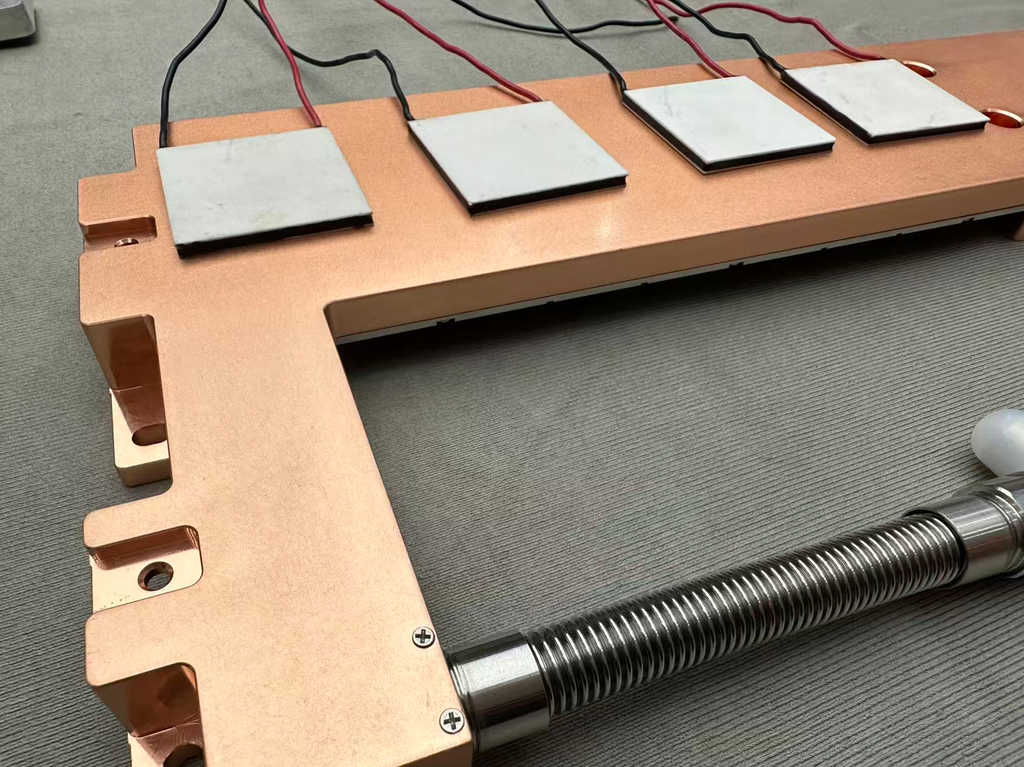
This article helps you understand the applications of TEC modules in optical modules.With the upgrade of 1.6T/3.2T high-speed optical modules and the iterative evolution of CPO/NPO co-packaged optics architectures, thermal management has become the core bottleneck restricting high-density optoelectronic packaging performance. This article analyzes the essential changes of TEC cooling applications in optical communication and advanced GPU packaging, as well as the domestic substitution opportunities of aluminum nitride ceramic substrates. ZICOthermal provides full-stack customized TEC module products and system application solutions for next-generation optoelectronic and computing hardware.
1. Introduction: Thermal Management Becomes the Core Design Barrier for New-Generation Computing and Optical Interconnection
Driven by the rapid expansion of AI computing power and data center traffic, high-speed optical communication systems are continuously upgrading from traditional 800G to 1.6T and 3.2T ultra-high-speed transmission standards. At the same time, CPO and NPO co-packaged optical architectures, which feature highly integrated optoelectronic design, are gradually replacing discrete optical module structures and becoming the mainstream technical direction of future high-speed interconnection. The drastic improvement of integration density brings unprecedented thermal challenges. A large number of laser light sources, photoelectric conversion chips and high-speed circuits are concentrated in extremely limited packaging space, resulting in sharp heat accumulation, laser wavelength drift, signal attenuation and long-term reliability degradation.
Traditional passive heat dissipation structures can no longer meet the precision temperature control requirements of high-speed optical systems. As a high-precision active cooling component, TEC thermoelectric coolers have completed the transformation from auxiliary accessories to core thermal management devices in new architecture iterations. As a professional thermal solution provider, ZICOthermal has long been deeply engaged in optoelectronic cooling scenarios, capable of providing full-stack TEC module products, structural optimization, thermal simulation and customized application development services for customers, helping solve precision temperature control difficulties in high-density optoelectronic packaging.

2. TEC Application Limitations in Traditional 1.6T Optical Module Architecture
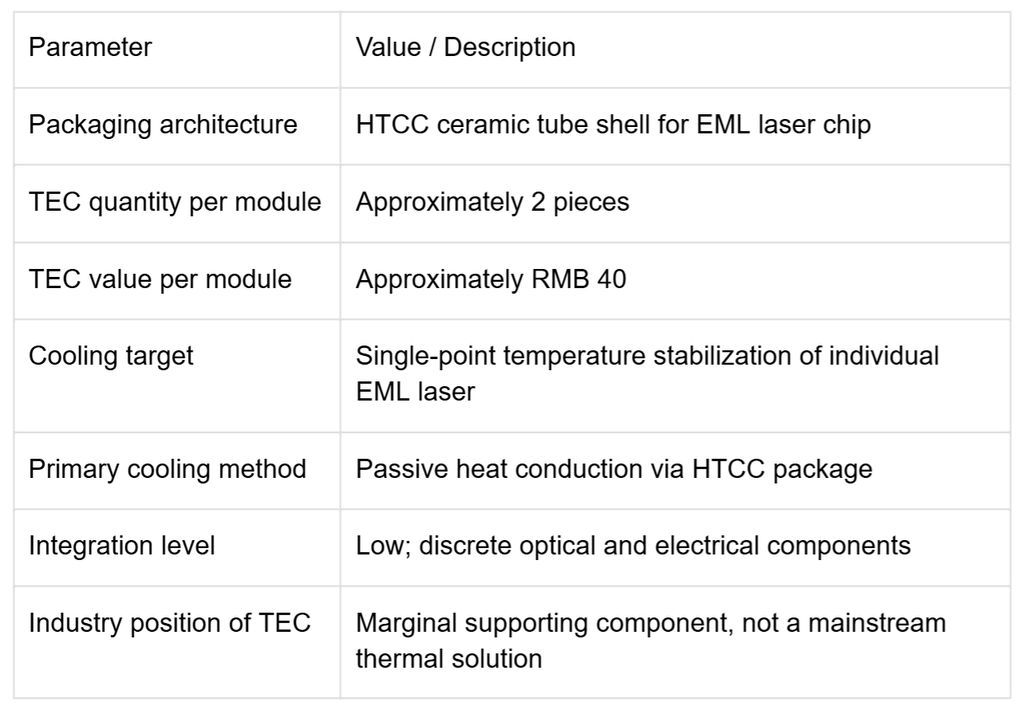
In the current mass-produced 1.6T high-speed optical module market, the industry still adopts mature HTCC ceramic tube shell packaging for EML laser chips, and the overall thermal design is dominated by passive heat conduction and heat dissipation. Under this traditional discrete packaging architecture, the working temperature of the laser only needs simple local compensation and stabilization, so the demand for TEC (thermoelectric cooler) devices is very limited. In actual industrial application, a single 1.6T optical module is only equipped with a small number of TEC chips, which are merely used for fine temperature calibration of individual laser chips, without participating in overall regional heat dissipation. The low single-unit dosage and low application value make TEC always in a marginal supporting position in traditional optical module supply chains, lacking large-scale industrial application space. The core reason is that the traditional packaging structure has low integration and loose heat source distribution, and passive heat dissipation can basically meet the operating standards of conventional optical module thermal management, resulting in no rigid demand for large-scale active cooling solutions.
3. CPO/NPO Architecture Iteration: TEC Upgrades to System-Level Core Thermal Component
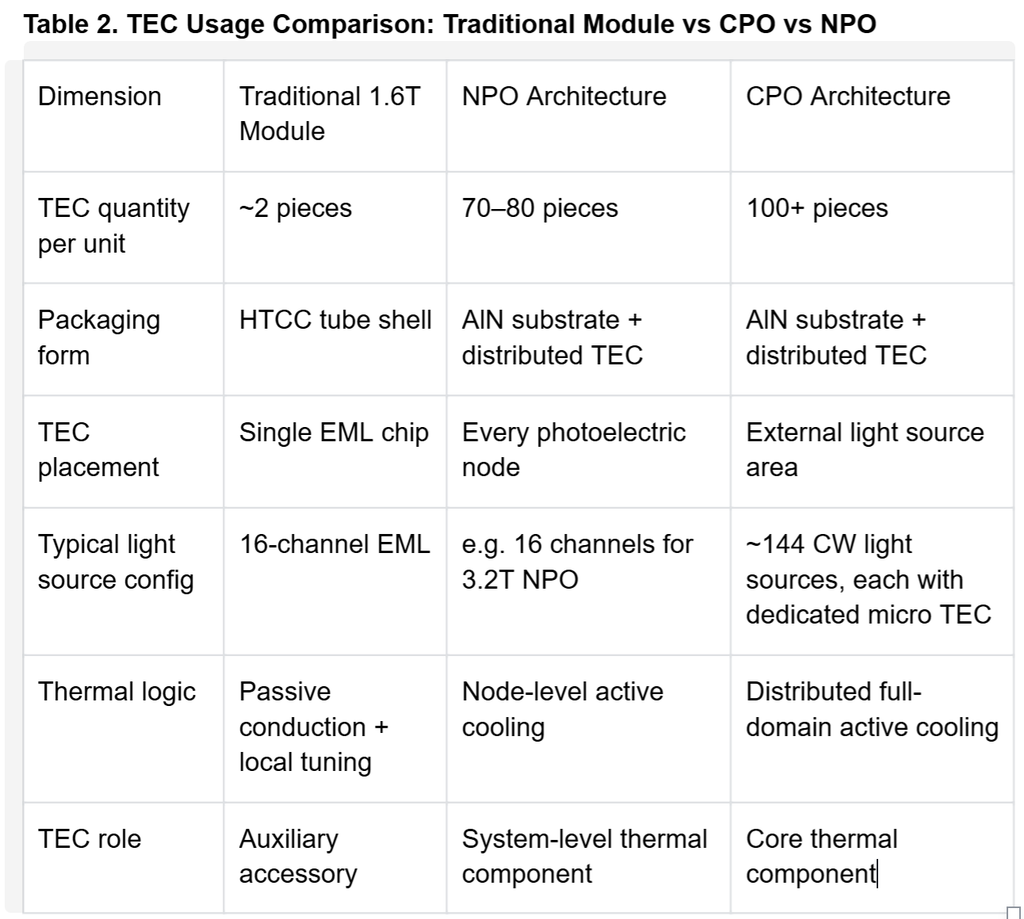
The revolutionary structural changes of CPO and NPO co-packaged optics have completely subverted the traditional heat dissipation logic of optical modules. The highly integrated optoelectronic fusion design eliminates the independent HTCC tube shell packaging form, and the entire industry has officially switched to the technical route of aluminum nitride ceramic substrate + distributed TEC module active cooling. Different from the single-point temperature adjustment mode of traditional modules, the new architecture requires independent and accurate temperature control for almost all on-board light sources and photoelectric nodes, which directly drives a substantial increase in TEC usage.
There are obvious differences in TEC consumption between the two architectures: a single CPO system requires more than 100 TEC units, while a single NPO module needs about 70 to 80 units. It is worth noting that the number of TECs is not linearly linked to the optical channel quantity, but is determined by the layout density of external light sources and the overall thermal design strategy. Massive distributed TEC modules effectively suppress heat accumulation in high-density optoelectronic integration, ensuring long-term stability and consistency of high-speed signal transmission.
4. Aluminum Nitride Ceramic Substrate: Core Carrier for Large-Scale Implementation of TEC Solutions
The large-scale popularization of TEC active cooling systems in CPO/NPO architectures is inseparable from the technical support of aluminum nitride ceramic substrates. Compared with glass substrates and ordinary alumina substrates, aluminum nitride materials have ultra-high thermal conductivity, excellent warpage resistance and high-precision circuit processing capability, which can adapt to the extreme working conditions of high temperature, high density and high precision in new optoelectronic packaging.
In the industrial cost structure of mid-to-high-end aluminum nitride substrates, the value of bare board only accounts for about 30%, and the core added value comes from metalization processing, precision circuit etching and special molding processes. In recent years, with the acceleration of domestic substitution in the semiconductor material industry, domestic manufacturers have gradually broken the long-term monopoly of Japanese brands such as Kyocera and Maruwa. New ceramic interposer solutions have completed early verification platform tests and are steadily promoting reliability aging tests, providing more independent and controllable material carrier options for domestic TEC thermal management systems.
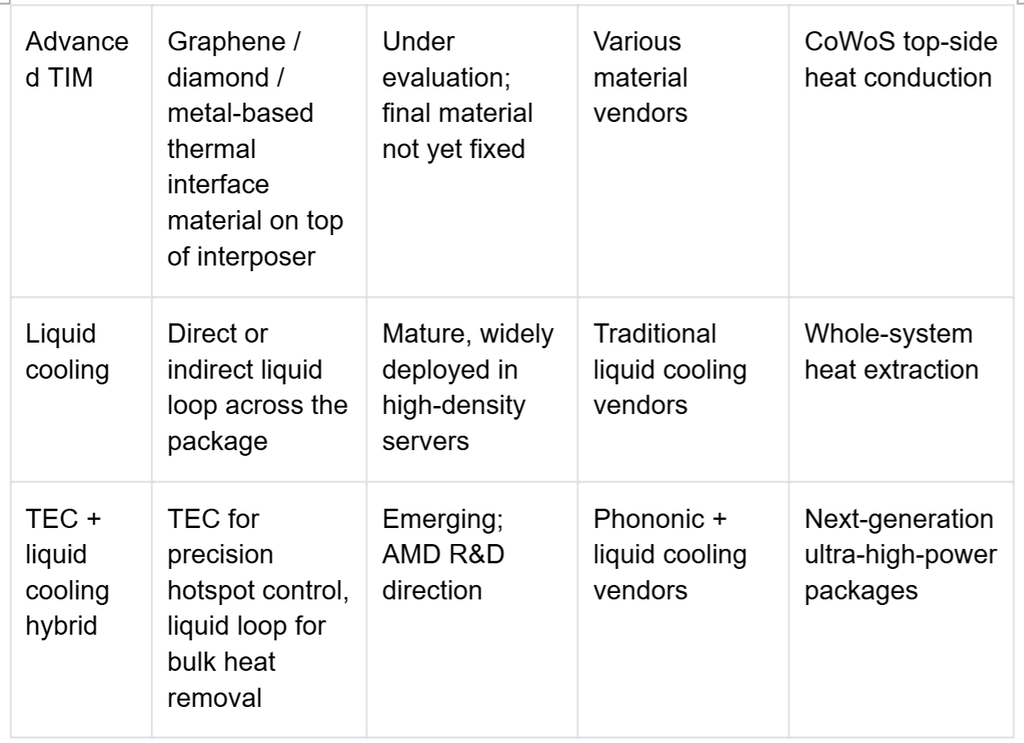
5. Scenario Expansion: TEC Cooling Technology Enters GPU & HBM Advanced Packaging Market
6. Conclusion: TEC Usheres in Dual Growth Dividends, ZICOthermal Empowers Customers with Full-Stack Thermal Solutions
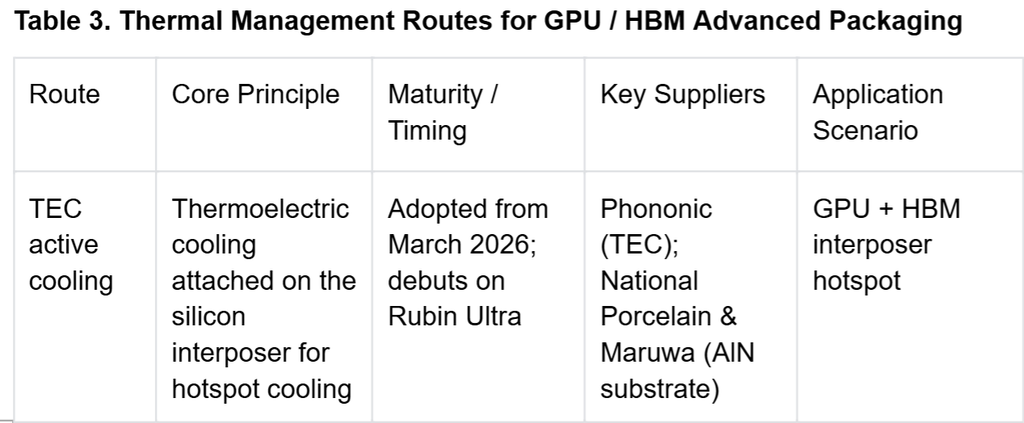
From the perspective of industrial evolution, TEC thermoelectric cooling devices are undergoing a fundamental positional upgrade in the optoelectronic industry, changing from trivial local temperature control accessories in traditional optical modules to system-level core thermal management components for CPO/NPO new architectures and GPU/HBM advanced packaging. The dual iteration of high-speed optical interconnection and AI computing hardware has opened up a new growth cycle for the TEC industry.
Benefiting from the continuous breakthroughs of domestic ceramic substrate materials and packaging processes, the independent substitution capability of domestic thermal management chains is constantly improving. As a professional thermal solution manufacturer focusing on TEC core technology, ZICOthermal integrates independent product R&D, structural optimization, thermal simulation verification and customized engineering services. We can provide customers with full-stack TEC module products and complete application landing schemes, helping enterprises quickly complete product verification and mass production iteration in the new round of high-density optoelectronic packaging upgrading wave. And you can email to us selena@zicothermal.com